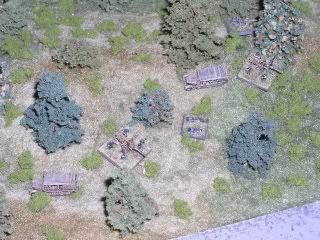
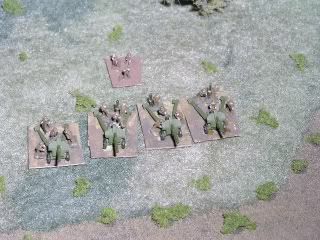
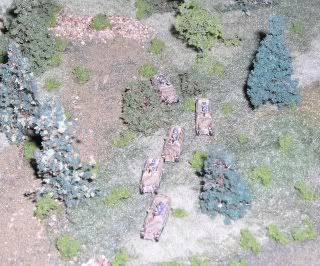
This is the second in a series of AARs describing the experiences of the Bay Area TankNet Pewter Pushers, a loose collection of die-hard treadheads, as we came to know and game with the Mein Panzer rules over the past couple of years.This AAR describes only our second game with Mein Panzer, played in May of 2006.The players:Soviets:Mark 1Rick GriestGermans:C.G. EricksonErick Lee (not a TankNet regular)Darryl Parker (not a TankNetter)Our setting was spring 1943 on the Eastern Front. 3 SS Pzr Grenedier Division Totenkopff is re-building after the winter battles, in anticipation of the big Citadel offensive (which will be delayed for several weeks).Soviet forces are moving their lines, and Totenkopff is called in as the fire brigade.Neither side knew what the other’s forces were. Neither knew what the other’s objectives were. We used hidden movement with “chits”, that were replaced with models as they were spotted per the rules.The Germans started partially deployed on the western end of the board. They had a screen out front, but the majority of their forces were on the edge of the board, as if they had just entered. The Soviets entered along the eastern edge of the board on the first turn.
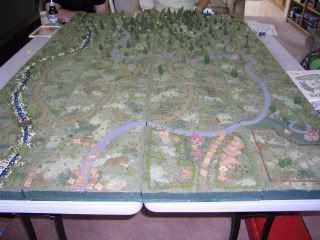
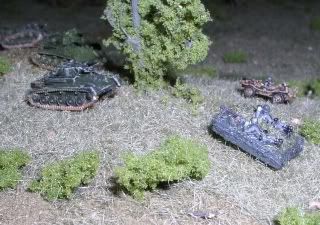
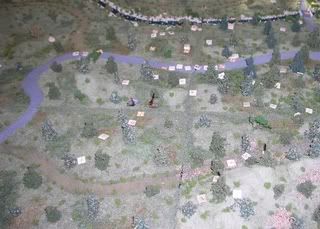
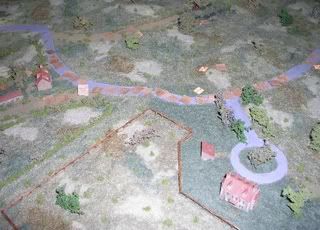
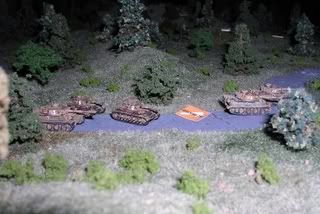
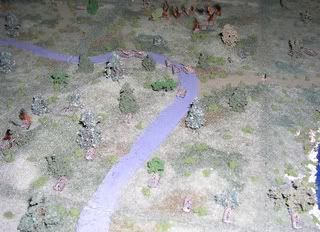
This is a view from the eastern edge of the board, as the Soviets are entering. Our battlefield was built from 12 of C.G’s absolutely beautiful terrain boards. Each board is 1 x 2 feet. He also covered the gaps between boards with loose flocking. In some of the pictures the seems are very visible – I think that is an artifact of the photo flash, because in person the flocking was a very effective camouflage for the gaps. There was a river running east to west along the South end of the board, which was bridged in two places. The bridge toward the west was a reasonable bridge. The one towards the east was a flimsy wooden bridge, which would not carry tanks (10t limit). There was a single paved road, which ran indirectly from east to west, with a big bend in the middle. This bend in the road turned out to be the centerpoint for most of the combat. There was also a network of dirt roads, and miscellaneous farm structures spread about.
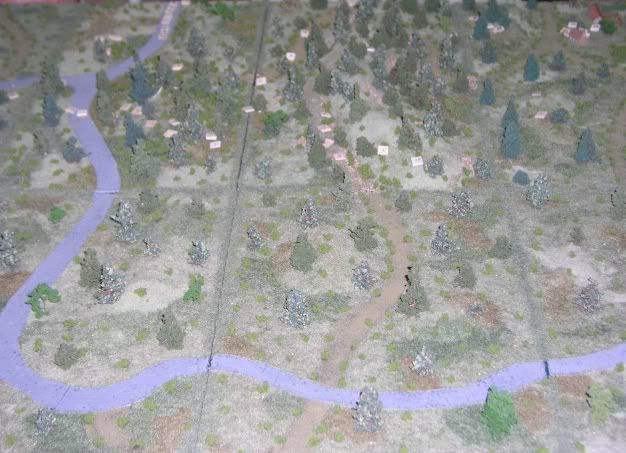
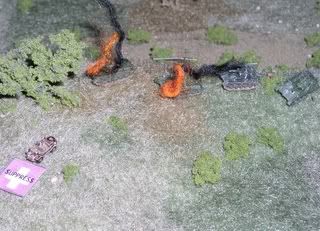
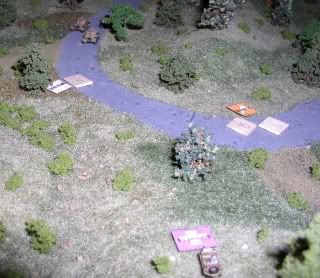
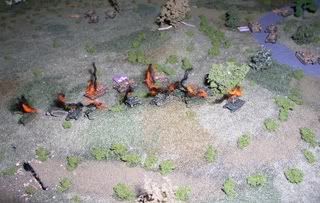
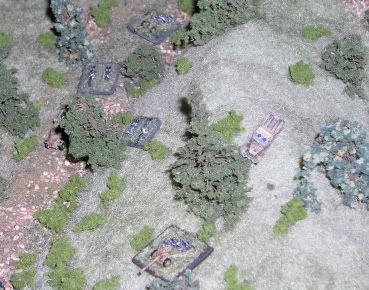
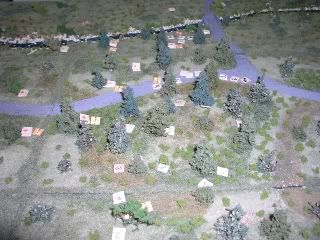
This is a view from mid-battlefield, looking west. The back end of the bend in the paved road is visible in front of us. The Germans are moving up the roads quickly to re-enforce the screening forces deployed in front of them.
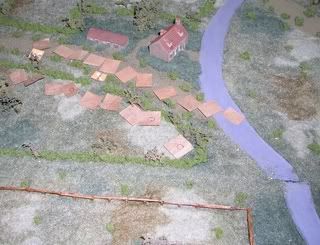
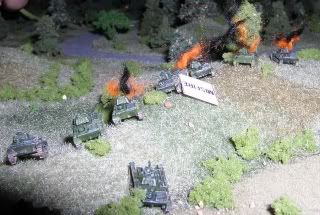
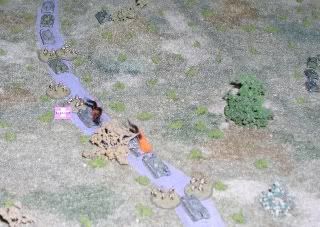
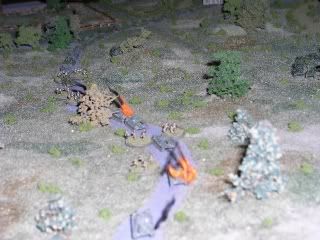
The Soviets came on the board in two columns. Here we are looking from the north, at the northern-most column.This was my command, the 2nd battalion. Per our plan, I entered the board, and quickly deployed off-road into hiding positions around the estate on the north-east corner.
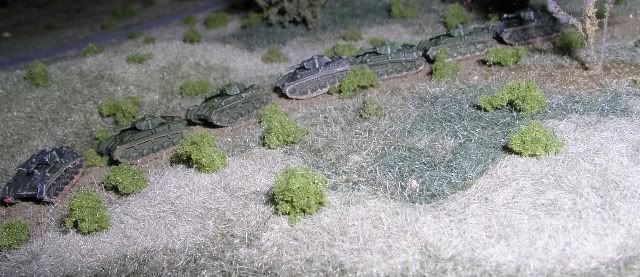
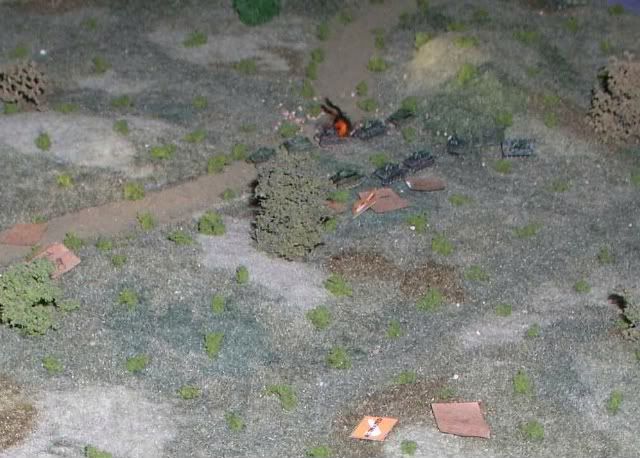
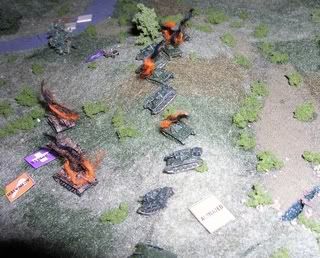
The 1st battalion, which made up the southern column, then split into two, with the 1st company continuing along towards the west on the southern half of the board. They were spotted as they crossed a small rise to reach a dirt road, and the models were placed on the table.Shots rang out, but no hits were scored. The Soviets were unable to spot where the fire originated. Camouflaged guns are hard to spot!
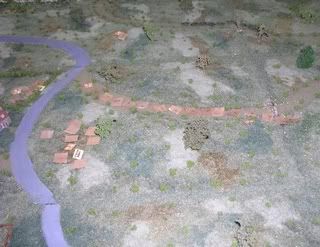
The 2nd company of the 1st battalion passed in front of my force to screen me to the west. The Soviet plan was to deploy the 1st BATT in front, seizing two pieces of high-ground with its two companies of T-70s, in order to “develop” the battlefield and give some notion of the forces we were facing. My 2nd BATT, two companies of T-34s with two platoons of infantry riding them, would then advance along whichever half of the board seemed to be the most lightly defended. My 1st COY, with the infantry riders, would deploy to fight with any forces blocking their path. My 2nd COY would pass through, and make a non-stop run for the end of the board. Our objective was to get units off the Western edge.
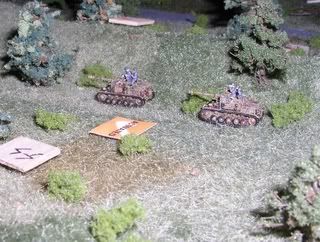
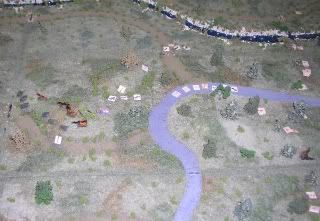
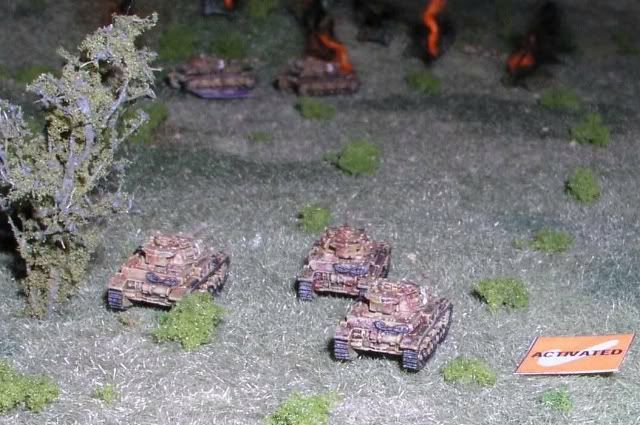
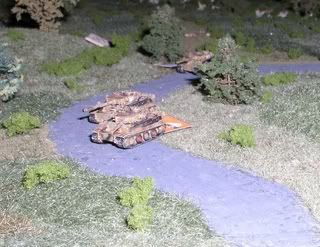
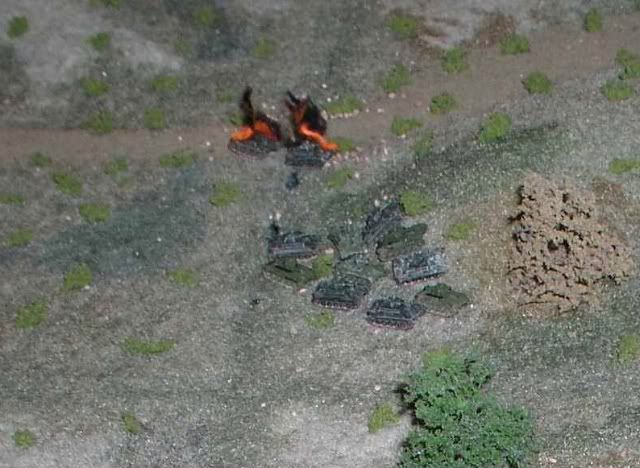
This view is from the north, looking at the German forces deploying.At this point, it was not at all obvious where or if there was a weak side to the German defenses.... more to come.-Mark 1